A Calendar Cue or a Place Cue?
Choose a calendar cue or place cue by matching the prompt to your routine, so it appears when you have a realistic chance to begin.
A calendar cue or place cue works best when it appears at the moment you can begin. If your mornings follow a steady timetable, a time-based reminder may fit; if your day shifts but you pass the same spot, a location cue may be more dependable.
The distinction can change whether a prompt feels helpful or easy to dismiss. Choose by looking at your ordinary day, the action itself and what happens when plans change.
A calendar cue attaches a routine to time
A calendar cue is a reminder tied to a clock time, a recurring calendar event or a point in your schedule. You might set a phone alert to stretch after lunch, add a reading session before bed or reserve a short writing block on weekday mornings.
Time cues suit routines that need a particular window. A language lesson may be easier before the evening gets busy; watering a plant might fit after breakfast, when you are already in the kitchen. A calendar entry makes the intention visible and can help protect the time from other plans.
The catch is that a clock does not know what your day is doing. An alert can arrive while you are travelling, in a meeting or caring for someone. If it repeatedly sounds at an inconvenient moment, you may start swiping it away without considering the routine.
Make the cue specific enough to prompt an action, not just a vague ambition. “Open the sketchbook and draw for a little while” gives you a clear first move. “Be creative” leaves you to decide what that means just as the reminder is asking for attention.
A place cue links a routine to a setting
A place cue uses a location or a physical object in a familiar spot as a prompt. Running shoes by the front door can remind you to take a walk when you leave. A notebook on the desk can invite a brief planning session when you sit down to work.
This cue follows your movement through the day rather than asking you to obey a particular hour. It can suit people whose schedules change, or routines that already belong to a setting: a few pages of reading in an armchair, for instance, or a breathing pause beside the kettle while it boils.
Place cues can be as simple as putting the relevant object where you will see it. A bookmark left on your pillow, a guitar stand beside the sofa or a watercolour pad on a clear table can make the intended action easier to recall. Keep the object visible without creating clutter or obstructing another task.
A location is not always available. You may work in different rooms, commute or share a space where leaving materials out is impractical. A cue can also fade into the background if it never changes and your eyes stop registering it.
Match the prompt to the routine’s natural opening
Ask what usually happens just before the routine could begin. If there is a reliable opening in your schedule, a calendar cue may fit. If the opening is more often a place, transition or repeated action, a place cue may feel more natural.
Compare “at six, practise guitar” with “when I finish dinner, pick up the guitar beside the sofa”. The first depends on the clock and your evening being free at that time. The second depends on finishing dinner and having the instrument within reach.
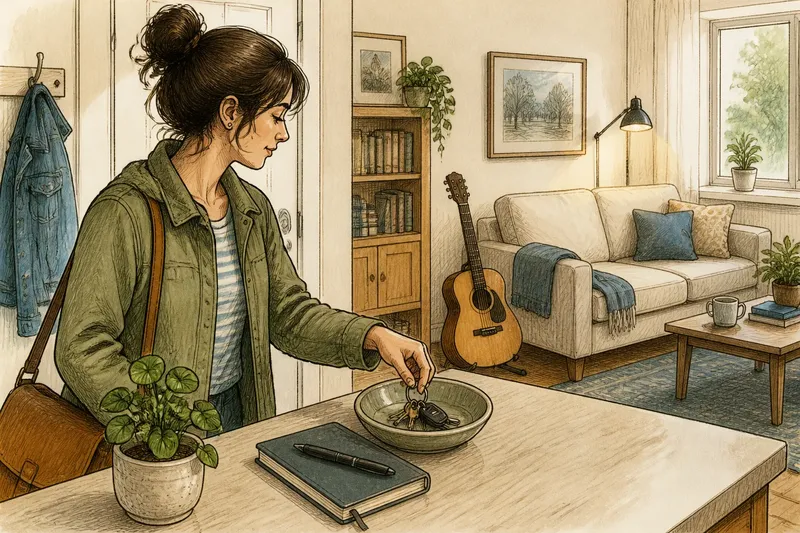
Say you want to write a few lines in a journal, but your workday ends at different times. Imagine you usually put your keys in a bowl near the kitchen counter when you get home. You place the journal beside the bowl; after arriving, you see it and write a few lines. The result is that the cue fits a changing arrival time, though it will not help on evenings when you come home somewhere else or cannot pause.
If a routine involves medication or another health matter, use the timing and instructions given by a qualified professional. A place cue may be easy to miss when you are away from home, so use a reliable reminder system suited to those instructions rather than changing the timing to fit a habit cue.
Use a calendar cue when timing matters
Choose a time-based prompt when the routine has a meaningful time window, when you need to coordinate with another person or when your day has a repeatable rhythm. A recurring event can also reserve space for an activity that otherwise gets crowded out.
Give the calendar entry a clear name and a realistic place in the day. If the routine needs preparation, include that in the cue: “Set out materials for tomorrow’s lesson” may be more useful in the evening than a reminder to practise when you are already about to leave.
- Check whether the chosen time is usually free; if it is, schedule the routine there, and if it is often occupied, choose a more workable window.
- Check whether the alert names a first action, such as opening a document; if it does, keep the wording, and if it does not, replace the vague prompt with a concrete action.
- Check whether the routine needs a transition, such as putting away lunch; if it does, leave room for that transition, and if it does not, keep the entry simple.
- Check whether you have a plan for a busy moment; if you can move the session, choose a later slot, and if you cannot, use a smaller version or skip it rather than leaving overdue alerts to pile up.
- Check whether the alert repeatedly clashes with real commitments; if it does, change its time or make its job “choose a later slot”, and if it does not, keep the reminder as it is.
- Check whether you notice the notification when it appears; if you do, leave its delivery settings alone, and if you routinely miss it, choose a more visible alert or pair it with a place cue.
Use a place cue when your schedule moves
Choose a location prompt when the routine can happen whenever you reach a particular setting, or when it naturally follows something you already do. This can reduce the need to check the clock and make a flexible day less dependent on a perfect schedule.
Make the cue easy to notice and the action easy to start. Put the book where you sit, not behind a stack of papers. Keep a recipe card near the ingredients you need. A home-screen widget or a note attached to a frequently used workspace can serve the same purpose if you actually see it there.
Check whether the location is stable enough. If you work from a different café each day, a laptop sleeve could cue you to review notes after opening the computer. If you share a living room, a small project pouch can carry your supplies without leaving them spread across a table.
Visibility need not mean leaving everything out. If a guitar must be put away for safety or a desk needs to stay clear, a photo, labelled container or note on the relevant shelf can mark the connection without making the room harder to use.
Which cue fits your daily pattern?
Can I use both kinds of cue for one routine?
Yes, if they do different jobs rather than competing for attention. A calendar reminder can reserve a window, while an item on your desk prompts the first action when that window arrives.
Which cue suits an unpredictable day?
A place cue can be more adaptable if you pass a dependable setting even as the hour changes. If the place changes too, use a flexible calendar reminder that lets you reschedule when a suitable opening appears.
What should I change if I keep ignoring a reminder?
Check whether it arrives at a workable moment and names an action you can start. If either part is missing, adjust the timing or wording; if both fit, try moving the cue to a place where you are more likely to notice it.
Does a place cue need a physical object?
No. A room, doorway, screen you open for work or recurring transition can all act as location cues. What matters is a dependable connection between encountering that setting and remembering the routine.
Let the cue adapt when the day changes
A cue is a prompt, not a contract. If you miss a routine because the day changed, ask whether the cue still fits the day you actually have. Perhaps the chosen hour is often occupied, or the item is hidden; adjusting the prompt may be enough.
You can choose a backup without building an elaborate system. A regular time can be the main prompt, with a visible object helping when you are home. Or the object can be primary, with a calendar reminder for days when you leave before seeing it.
Keep the arrangement simple enough to remember. Too many alarms and strategically placed objects can turn the routine into a search for prompts. Pick one cue, notice whether it appears at a useful moment, and make one modest adjustment if it does not.
The best calendar cue or place cue is not the one that looks neatest in an app or room. It is the one that catches your attention when beginning is genuinely possible. Let your actual daily pattern guide the choice, and change it when that pattern shifts.